Does my Horse Need a Hoof Supplement?

In this post about horse care we examine situations in which you may want to use a horse hoof supplement.

You might consider adding a hoof supplement to your horse’s daily feed if your horse has issues with:

  • Poor hoof growth
  • Cracks and ridging of the hoof wall
  • Thin, brittle hoof wall
  • Losing his shoes constantly

Or if you deal with

  • Competition horses, horses in hard work, or those with low fiber diets, that have poor-quality hooves

Certain nutrients in the horse’s diet are transported via the bloodstream to the hoof and play a role in stimulating hoof growth and repair. One nutrient that has received a lot of attention, in respect to hoof care, is the vitamin biotin.

Biotin, also known as vitamin B-7 or vitamin H, is produced in the horse’s hind gut from the breakdown of fiber in the diet. Biotin is a water-soluble vitamin that cannot be stored in the body for long, therefore, if there is a deficiency, it needs to be added to the diet every day.

We do not know exactly how biotin functions, but it is thought necessary for the production of keratin, a key component in the structure of the hoof wall.

Studies have shown that there is a significant improvement in overall hoof condition when biotin is fed at the rate of 15 to 25mg per day. Studies where biotin has been added to the diet have shown improved growth rate and improved hoof quality – this includes hardness and strength.  Other nutrients such as zinc, methionine can also affect hoof quality so look for a hoof supplement that contains these as well as biotin.

An overall balanced diet, a healthy digestive tract, proper hydration and exercise will help a hoof supplement achieve optimal results. There may be multiple reasons why a horse has poor hoof quality. The effects of any supplement on hoof growth will not be seen until the new and improved growth comprises most of the hoof, which can take six to nine months in an average horse. Veterinarians and farriers observe that horses respond differently to hoof supplements. Your results may vary, and what works for one horse may not work as well for another. Rate of new hoof growth will vary amongst different horses and the climate – growth is slower during periods of colder weather.

Most people turn to a hoof supplement when the poor quality of their horse’s hoof leads to loose or lost shoes, comments from the farrier, or just observing an increase in chipping and cracks. An injured hoof may also benefit from a hoof supplement to insure that new growth is healthy–and accelerated.

Laura Kraut tells how the company Horse First came to her rescue last December when Cedric sustained damage to his hoof and coronet band. Laura added Hoof First to Cedric’s feed for twenty days and then was able to compete again. Laura commented “these photos show that Horse First works.”

Before

Before

After

After

We wish your horse strong and healthy feet!

Let us know your tips for healthy hooves.

AMS Saddle Panel Technology – Explained

Up until a few years ago, the idea of stuffed panels was virtually unheard of on a competition jumping saddle. Using the Pessoa brand as an example, 95% of the saddles sold in Europe had Bayflex Molded Memory Cell foam panels.

5 Years or so ago, the maker of Pessoa saddles, Pedro Ruiz Diaz, worked with a German company to develop a stuffed panel that improved upon the traditional wool or synthetic wool flocked panels used in dressage saddles.

The goal was to create a panel that could be re-stuffed and shaped like a flocked panel, yet did not have the problems of the wool shifting or bunching up, which can create hot spots and bumps that create soreness. The AMS panel was the result of this quest and it stands apart from other panels.

The extreme quality of Bayer synthetic wool provides resilience under all weather and temperature conditions with no chance of mold or mildew. This synthetic wool is encased in a breathable neoprene wrap that provides a smooth, yet adaptable, surface that absorbs rather than transmits pressure to the horse’s back. Neoprene was chosen due to its breathability, shock attenuation and wear-ability. Latex was ruled out as it had a tendency to become hot, as well as to break down and crumble over extended usage.

In Europe, the AMS panel soon found favor. The neoprene sheath proved even more interesting as it became clear that the panel, which was not firm and did not have hard solid edges, molded itself to the horse’s back. The softer composition, unlike non-molded Latex, flattened out on the horse’s back to provide an even more effective platform for the even distribution of the rider’s weight.

By some stroke of chance, a German customer asked to have AMS panels put onto the Pessoa jumping saddle. With a curious eye, Nelson watched as the new model was developed. The outcome was transforming. The panels worked as well on a jumping saddle as they did on a dressage saddle. While show jumpers did not have the same inclination for a stuffed panel saddle, many found that the AMS panels improved their horse’s performance and well-being.

It did not take too long for the AMS fitted jumping saddles to become popular in Europe, in the tradition set by the dressage models years earlier. Today, more than 50% of all European Pessoa production is outfitted with the AMS panels. The AMS panel system is available on the A/O as well as certain Gen-X models.

We think our motto – No lumps, No bumps, No hotspots – pretty much sums up the benefits of the AMS panel system. The AMS panels are a plus for everyone truly concerned about how a saddle fits and works on the horse’s back.

Provided by guest blogger Kelly Lynn Smith. Kelly is a Saddle Manager at English Riding Supply. Entry represents the personal opinion of the blogger and is not formally edited. 

10 Tips For Trailering Your Horse

Elly SchobelWe’ve been getting many questions about how to transport or travel with your horse, so we reached out to our good friend Elly Schoebel for some tips and here’s what she had to say:

As a breeder and competitor I often trailer horses…broodmares with foals, yearlings and two year- olds to their first breeding shows. My truck and trailer are used frequently, so oil changes, tire pressure, greased ball bearings/trailer hitches are a monthly routine. In addition, cleaning the inside of your trailer is a must to provide cleanliness and safety. Here are a few other tips I have gathered over the years:

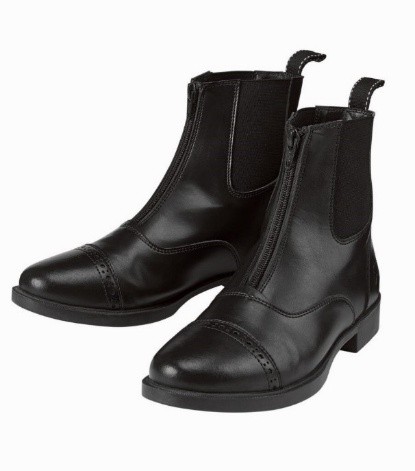
1. PLEASE, PLEASE use proper footwear when loading (or handling) any horse. Solid paddock boots, preferably waterproof (I like the zipper versions, fast to get on) and a pair of sturdy gloves (leather gloves are my favorite) should be standard equipment.

2. I prefer leather halters, or nylon halters with a leather crown piece because in an emergency, these halters break. Usually I use a plain cotton lead rope, but always have a 6′ leather lead with a chain in my trailer tack room – young colts can get pretty rude at times and I want to be ready to ‘explain’ to them, who actually runs the show.

3. My 3-4 year olds learn early on, that shipping halters and shipping boots are part of their trailering experience – again, protection is of utmost importance to me and I will take a lot of time to introduce my youngsters to all the equipment PRIOR to loading them. They usually spent some time in the wash/grooming stalls, wearing everything. Once this is not big issue anymore, we move on to loading.

4. Loading is always done with an older horse provided to give ‘a lead’ to the younger horse – taking time to train horses to load, without the stress of having to be at the show at a certain time, makes the entire experience less stressful.

5. Make sure that your trailer in good working condition. This includes:
• clean, filled with fresh shavings (or straw)
• all moving parts, such as partitions, chains, trailer ties which are not in use are secured
• trailer hitch is in working condition, property oiled/greased, in the correct position to pull the trailer in an optimal (level) position
• electric system, including brakes and trailer lights (inside and outside) work

6. For any trip, have a couple of clean 5 gallon water containers with you. Some horses will not drink water that tastes different then at home – and a dehydrated horse is never a good thing on the road.

7. Hay nets – I personally prefer the newer ones with the really small squares. It makes horses work harder trying to pull hay through. This takes more time and concentration – i.e. they will be occupied for a longer period of time. Generally we put an entire bale of hay in each net and hang it between 2 horses – this serves 2 purposes:
• it creates a type of partition between the horses
• both horses can eat at the same time from each side

8. We also keep a broom/pitch fork/shovel in the trailer at all times, making it easier to find when needed.

9. Keep required paperwork for each show in the trailer, for example a copy of Coggins and a health certificate – good for 30 days.

10. Another important item we always have on the trailer is a so-called Emergency kit. Ours contains the following:

• Vet wraps/sterile gauze
• SMZ (pills), both Bute and Banamine in paste form
• Rubbing alcohol
• Band Aids/Lidocaine for severe Sunburn/Tylenol

I am sure that all of you have your own set-up. These are just a few tips – enjoy your horses until we talk again.

We’d like to thank Elly for her wonderful contribution. Do you have any tips you’d like to add when it comes to tailoring your horse? If you do, please leave a comment below!

From our Guest Blogger Elly Schoebel. Entry represents the personal opinion of the blogger and is not formally edited.

Elly Schoebel is a German trained Bereiter FN, Grand Prix rider and trainer, Champion of Selection Trials for World Champion for Young Dressage Horses, breeder/owner of successful Event horses (her mare De Luetje MF was 2012 Future Event Horse Champion). She owns and operates a small dressage training/breeder farm in South Carolina.


How to Prepare Your Horse for an Event

corinne-ashton-rolex

Guest Blogger Four Star Eventer Corinne Ashton shares her experience getting herself and her American Thoroughbred gelding Dobbin ready for a three-day event. Entry represents the personal opinion of the blogger and is not formally edited.

Firstly there is the obvious: your horse is sound and fit.  This is true for any level of eventing. Just how many hills you have gone up for your fitness regime depends on the level of competition and the individual horse. Smaller Thoroughbreds, like Dobbin, get fit easily and cause less pounding on their limbs, but work with your vet and trainer to ascertain a good regime.

Equipment! You’ve spent weeks–no months and years — gathering the necessary equipment! Look around, see what others are using, even ask them why and what they like about the tack and gear they’ve chosen. Look in magazines, online and in tack shops, and pick the brains of the staff in tack shops as many are  riders themselves.  I’m a believer in less is more; Dobbin taught me that.  Start with some really good quality equipment, including a well-fitting saddle and bridle.

So from your arsenal of equipment you know what you are going to show in.  How?  Because you’ve done some jump and xc schools, maybe a lower level show or maybe just in a lesson.  That equipment is cleaned and packed in the trailer, if it is not in daily usage. No last minute packing!

In the last few days before the event you can’t really change too much about his training, that was all done in the weeks and months leading up to this, and of course you know you are entering an appropriate level as your trainer(s) approved.  But you can be sympathetic to his needs, is he a horse that likes to be out in the field with his buddies (most do). Then facilitate as much of that as possible, he knows there is an upcoming big competition and needs his nerves soothed.  On that note don’t go overboard but you could add some stomach soothing supplements, I use UlcerGard and Assure® Guard. If you are stabled at the show, hand walk your horse as much as possible.  I know all those Rolex horses will be walked, walked, walked and hand-grazed–very important!

You, the rider, want to look as spiffy as possible, but as with your horse perhaps you don’t want to be sporting first time goods at a big event.  Have a trial run of clothes, break in any new boots, and make sure they are shined before you get there, and most importantly have the best possible safety equipment, helmets and xc vest.  This is an area to spend a little more money on, there are a lot of choices out there, read, ask and try on.  I know I would be happy to share my views with anyone who asked so don’t be afraid to.  And I have some real experience of what such equipment needs to do! Haha!

Also be in the best physical shape possible. There’s no point in having your horse fit and ready and you not.  Go to the gym, take yoga classes, see a chiropractor and other such means to feel your best.  One Rolex I managed to pull a muscle in my lower back (due to some spine misalignment) during my dressage test which resulted in me having to withdraw. Dobbin, however, was in excellent form!  Now that was cruel!

So we all have some phobias and good luck charms that are ok. Go with them.  Some of mine are to wear the same jewelry for the jog up and never cut the horse’s whiskers, the latter being something to do with Samson losing his strength when his hair got cut off or is it just because they use their whiskers as a feeling mechanism? At my first Rolex, I went off to change for the jog and came back to discover one of the helping girls had taken a pair of scissors to Dobbin’s whiskers!  Agh how could I continue? He did however go on to jump clear, proving my theories inaccurate, BUT Dobbin has never had his whiskers cut again!

Last but not least, most of us do this for fun, be as prepared and organized as possible but never forget to appreciate and enjoy your horses and your journey with them!

How do you prepare your horse for a show or event? Leave a comment below!

How To Find The Perfect Pair Of Tall Riding Boots

It is now easier than ever to find the perfect tall boots that look fabulous and fit well!

Tall riding boots should look elegant and be durable, practical and comfortable.  There are so many choices now in leather, design and technology – but a good fit remains the most important factor when shopping for that perfect pair of tall boots.

How to Measure for Stock Tall Riding Boots 

You’ll most likely need to measure when deciding on the proper tall riding boot. This process is much easier if you ask a friend to help with the measurements!

  1. Wear the riding clothes (breeches and socks) you usually wear when riding.
  2. Sit in a chair with a flat straight seat and place your feet flat on the floor with knees at a 90° angle.
  3. Take the measurement around your calf at the widest part.
  4. Measure the height from the floor to the back of your knee.

how-to-measure-for-tall-boot

Field Boots

Field boots have laces and are designed for the jumping disciplines. See the Tredstep Donatello Field Boot as an example of this type of boot. Field boots should be purchased taller than the final height required as they will drop, soften and crease around your ankle to allow for the correct leg position when riding.

Trying on Field Boots

When shopping for a new pair of tall boots try on different styles as they will fit differently.

The foot portion should be comfortable – not too tight, but also not too big. The sole should be comfortable, although it will often harder than the sole of a shoe.

You should purchase field boots 1 ½ to 2 inches taller than the final height required. The amount of drop depends on the cut of the boot and the softness of the leather. For field boots for which you want the maximum height after break-in, the front of the boot should rise to the middle of your kneecap. The boots will seem uncomfortably tall and will crease slightly at the top when you bend your knee. This crease will disappear when the boots drop. You can see how high your boot will appear after the break-in phase by placing a heel lift in the footbed to raise your leg inside the boot.

Pull on or zip up your boots. Use boot hooks help get your tall boots on! Initially, they should be difficult to tug on (and off). If your boots have zippers, you should be able to zip them all the way up and snap the closure at the top while standing. The boots should feel snug and tight around your calf without cutting off your circulation.

If the boot is too loose, when it breaks in and stretches it will develop deep folds around your ankle that may press into your skin and cause discomfort. Also, if the boot is too loose, it will drop too much and be too short in height. Boots without a zipper need to be a little difficult to get on and off as they need to fit snugly, and the leather will stretch over time.

Now walk around in the boots you are trying, bend your knees and crouch into a riding position. You may need to try insoles or heel lifts to get a better fit or more comfort.

Breaking-in Field Boots

You can prevent your new tall field boots from rubbing the back of your knees during the break-in period by using a heel lift. Socks such as slippery Zocks that make boots easier to slide on.

Dressage Boots

Dressage boots are made with stiffer leather than field boots, and are designed to drop less. The drop is usually about ¾ inch. Softer, finer leather will drop more than thicker leather. Dressage boots should be high enough at the knee to help achieve an elegant, elongated leg in the saddle. The front of the boot should rise to just under your kneecap. The inside of the boot should be just below the back of the knee once the boots are broken in. For an example of a dressage boot see the Konigs Favorite Dressage Boot.

LAST CHANCE: Your $200 Gift is Waiting For You!

LAST CHANCE! Save over $200 on the EASY-CHANGE™ Fit Solution when you purchase a new Bates or Wintec Saddle!

Shop Now!

A $200 value FREE – purchase your NEW Bates or Wintec Saddle featuring the EASY-CHANGE™ Fit Solution and receive a FREE EASY-CHANGE™ Promo Gullet Pack and FREE EASY-CHANGE™ Riser Pack. Free packs added automatically at checkout!

Hurry, offer ends 04/30/2013!

New Show Coat Styles at Dover Saddlery!

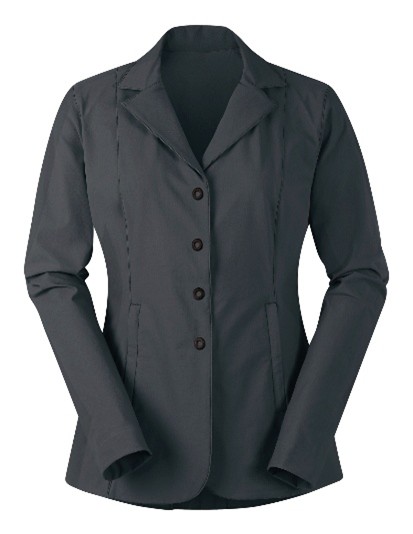
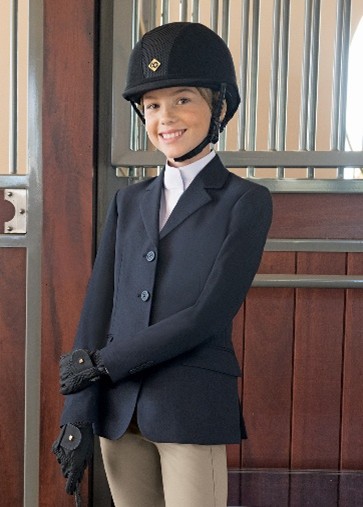
Show coats, show coats and more show coats! Just in time for spring, Dover Saddlery is now offering our largest selection of show coats yet! We have expanded our selection of show jackets and dressage coats from all the leading brands in the world, including Animo, Alessandro Albanese, Cavallo®, FITS®, GPA®, Grand Prix®, Horseware®, Pikeur®, RJ Classics and more. The latest show coats are created in athletically-inspired fabrics with properties developed to keep the rider cool, comfortable and able to move freely. New coats range in styles to flatter every figure and to satisfy the tastes of every competitor from the most fashion-forward to the most traditional, for the hunter, jumper, dressage and eventing arenas.

As busy athletes, riders will appreciate the use of technical fabrics in most of the new show coat styles. These fabrics are incredibly lightweight, stretchable, breathable, moisture-wicking, machine washable and easy-care. The Animo Leon Competition Coat, for example, is incredibly lightweight and offers unprecedented stretch that allows the rider complete freedom of movement.

Reed Kessler Olympian Show Jumper Riding Ligist

Fashionable trends in show coats include European-inspired shortened hemlines, as can be found in the Pikeur Gotha II Competition Coat or the Pikeur Skarlett Dressage Coat. For an updated look on classic styles, look for contrasting piping accents, as in Pikeur’s Sarissa Competition Coat, or subtle zippered pockets that virtually disappear against the rider’s silhouette, as in Alessandro Albanese’s Easy Care Competition Coat. This is the coat of choice by well known American Show Jumping Olympian Reed Kessler. Reed says “I love this coat because I’m so busy all day with lots of horses and it is so easy to keep this coat looking great.  My favorite part is Alessandro’s style – a beautiful fit and very classic.”

“We are excited to be able to offer such a wide selection of show coats,” says Patricia Nesto, senior buyer at Dover Saddlery. “We have included selections from all of the top brands in the world as well as ensured a range of styles, sizes and prices points to suit all competitors at all levels.”


New USEF Rule Regarding Black Stirrups

Many of our customers and fans have asked us to clarify the new USEF rule regarding black stirrups in equitation competition. We went right to USEF to help clear things up! Here’s their answer:

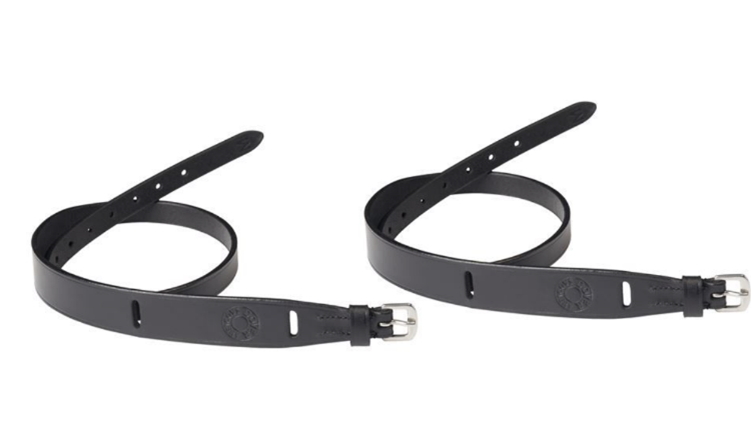
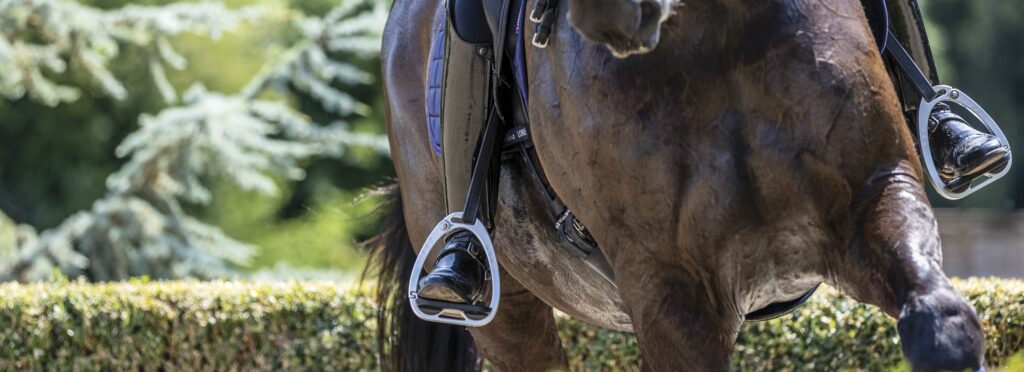
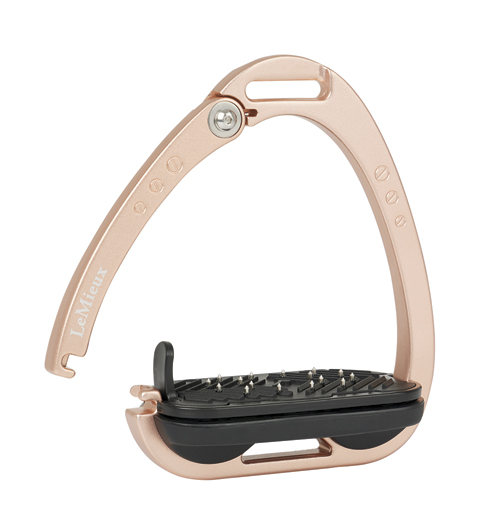
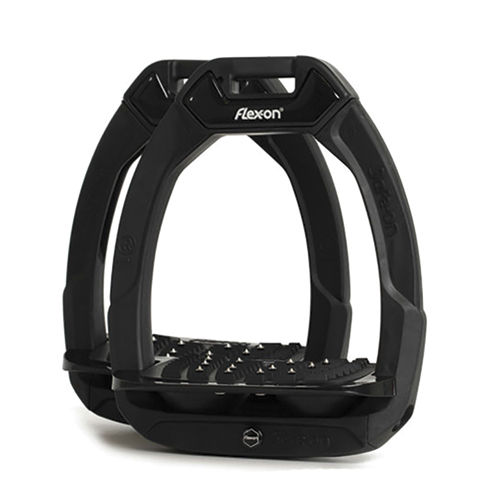
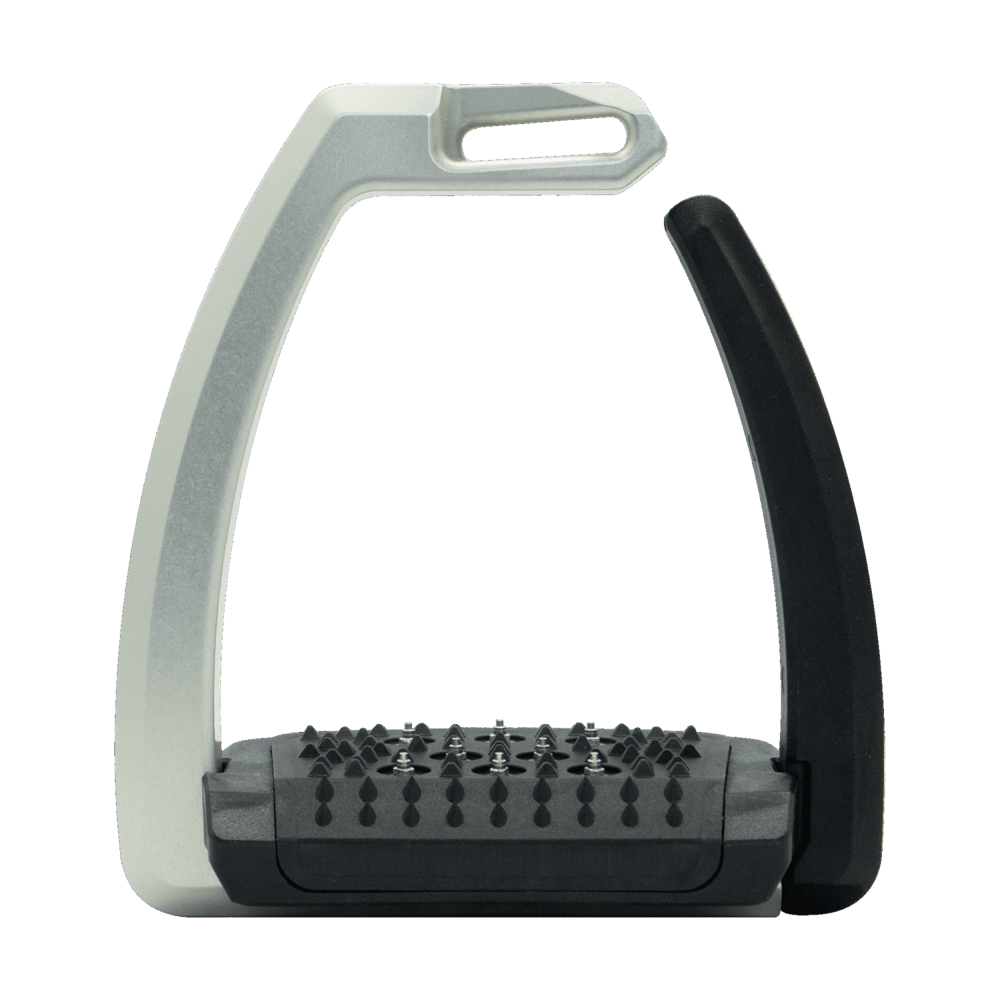
“The Equitation rule change regarding black stirrups will be in effect for the 2014 competition year beginning December 1, 2013. The intent listed on the rule change proposal is, ‘Black stirrups are not part of traditional attire and hide rider position flaws, making it difficult for the judges to clearly see the rider’s leg position.’

The USHJA Equitation Task Force is in the process of adding language to the rule change in advance of the 12/1/2013 effective date that will clarify the style of black stirrups that are prohibited. The rule will apply to stirrups that are entirely black, such as the composite stirrups sometimes used in show jumping. Stirrups with black rubber on the branches that cover a portion of the stainless steel will still be allowed for use in equitation when the new rule takes effect.” – Lauren Fahey, Director of Hunter Affiliates, USEF

To clarify further, this rule will ONLY apply to equitation classes. It does not apply to riders competing in hunter or jumper classes at USEF competitions.


Dover & Goode Rider give-away contest!

This season’s new GR spring collection is athletically inspired and designed for performance (see the collection here).

Dover Saddlery - Goode Rider CollectionTo celebrate, we are giving away one pair of Full-Seat Breeches and one pair of Knee-Patch Breeches!

How to enter:
1) Write a comment below, on our Goode Rider contest blog post, on what pair of breeches you would like and why.

2) Be sure to fill in your name & email address so we can contact you if you win!


***Make sure to check out our Facebook page next Thursday (4/4/13) to see if you are one of our winners!***

Contest ends 4/3/2013 at 11:59PM EST. The two winners will be chosen, at random, on 4/4/13. Only 1 entry per person. No purchase necessary. Winner must reside in the continental United States and be 13 years or older. Judge’s decision is final. Facebook is in no way connected with this contest.